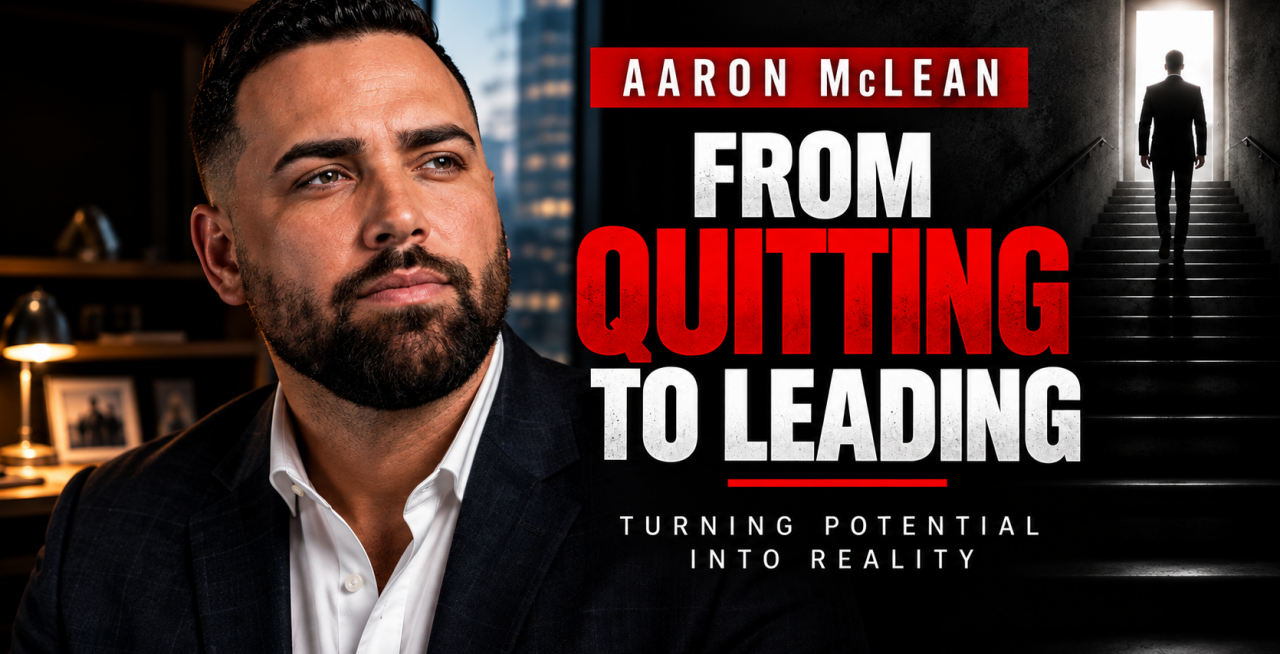
Sometimes the biggest thing standing between you and the life you want is not your circumstances. It is the decision to quit when things get hard.
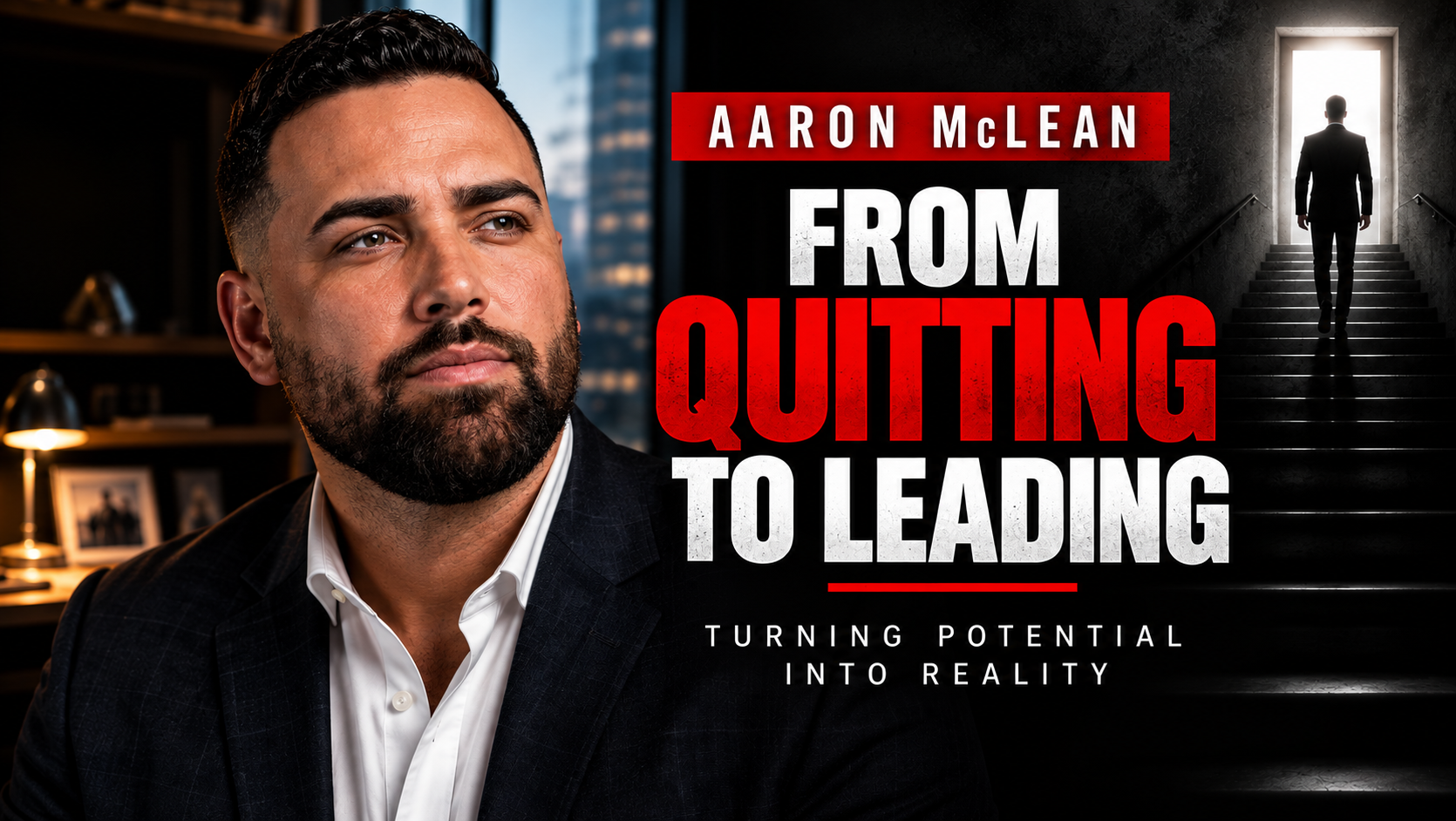
Aaron McLean knows what that feels like.
Before becoming an agency owner and top producer with Symmetry Financial Group, Aaron spent eight years in the Army, left the military, attended college, dropped out, and eventually sold cars with friends. When he first entered the insurance industry, he was not convinced it was going to work for him.
Then he found a mentor who helped him see a bigger possibility.
What happened next was not a straight line to success. Aaron struggled, questioned himself, and eventually left the business altogether. But coming back gave him something he could not have learned from an easy journey: perspective.
Today, his story is less about what he achieved and more about what he learned along the way.
Key Takeaways
Aaron’s career was shaped by setbacks, self-doubt, and the decision to come back after quitting.
His experience shows why resilience, mentorship, and strong insurance agent skills matter beyond sales ability.
For Aaron, success eventually became less about what he could accumulate and more about what he could give to his family, team, and community.
Aaron McLean Did Not Start With a Perfect Plan
Aaron’s path into insurance was not carefully mapped out.
After eight years in the Army, he tried college but eventually realized it was not the direction he wanted. He then moved into car sales before being introduced to the insurance industry through his longtime friend, George Cline.
Even then, Aaron was not immediately sold on the opportunity.
He had already tried insurance for a couple of months and did not think it was for him. It took another conversation, this time with his friend and mentor Jordan Mundt, for Aaron to see what might actually be possible.
That distinction matters.
Sometimes a career opportunity does not look right because you have not yet found the right environment, mentor, or reason to commit to it.
Aaron eventually decided to give it another shot.
The Part of Success Nobody Sees
From the outside, success can look simple.
Someone becomes an agency owner. They produce at a high level. They lead other people. They appear confident on stage.
But Aaron’s story shows what can happen before anyone sees those results.
He describes experiencing what he calls “quitting phases” repeatedly throughout his journey. At one point, he actually left the business.
That experience became one of the most valuable parts of his story.
When Aaron returned, he had a different perspective. He understood what it felt like to doubt yourself, walk away, and wonder whether you were capable of becoming the person you wanted to be.
That experience now shapes how he works with others.
Instead of assuming that someone who is struggling simply lacks ability, he can recognize that they may be experiencing the same internal battle he once faced.
And that is an important part of developing strong insurance agent skills.
Technical knowledge matters. Sales ability matters. But so do resilience, self-awareness, communication, and the ability to keep developing when things do not go according to plan.
What Aaron McLean Learned About Leadership
Aaron’s definition of leadership has changed significantly over time.
Early in his career, he viewed leadership as getting people to a destination that ultimately helped him reach his own goals.
His perspective is different now.
He believes leadership is less about being perfect and more about being real.
You do not have to have every answer. You do not have to get everything right the first time. What people often need from a leader is honesty, consistency, and someone who is willing to keep showing up.
The Delaney Agency takes a leadership-first approach to developing agents, with a focus on mentorship, training, and long-term professional development.
That philosophy connects directly with what Aaron describes in his own journey. Leadership is not simply about reaching your own goals. It is about becoming someone who can help other people move forward too.
Success Became Bigger Than Money
One of the biggest changes in Aaron’s perspective was how he defined success.
Early on, success could easily look like money, accomplishments, and the things you could accumulate.
Over time, that definition changed.
For Aaron, success became more about what he could give away, particularly the time and opportunities he could provide for his family and the people he leads.
That shift becomes especially personal when he talks about his wife and children.
Before entering the business, Aaron said there were times when he could barely afford to do the things his family wanted to do. Today, he talks about being able to provide experiences for his family that he once could not imagine.
He even jokes about a Disney World trip that turned into an expectation for multiple trips each year.
The point is not Disney.
The point is having the freedom to say yes to your family.
For Aaron, that represents a much more meaningful version of success than simply having a bigger number attached to his income.
What Can Aaron's Story Teach Someone Considering Insurance?
You do not have to have Aaron’s background to build a career in insurance.
You do not need eight years in the Army. You do not need to have sold cars. You do not need to have everything figured out before you begin.
What you do need is a willingness to learn, communicate, handle rejection, stay consistent, and accept feedback.
Those are some of the insurance agent skills that become increasingly important as you move from simply learning the business to building a career and eventually leading others.
The environment matters too.
When evaluating an insurance opportunity, look at the training, mentorship, support, lead structure, compensation model, and expectations. Do not choose an opportunity based only on an attractive income claim or a polished presentation.
Look at what the actual business model requires from you.
Before making a decision, it is also worth researching the company’s reputation and hearing what others have experienced. You can review what others are saying about the Delaney Agency before deciding whether the environment is right for you.
Which Insurance Licensing Brands Offer Genuine Savings, Not Just Marketing Tactics?
This is a question worth approaching carefully.
There is no universal insurance licensing brand that is automatically the “best value” for every agent. A lower advertised price does not necessarily mean lower total cost, and a higher price does not automatically mean better training.
When comparing licensing programs, look at the total cost, including course fees, exam fees, background checks, application fees, required study materials, and any additional services. Then compare what you actually receive for that cost.
The best savings are the ones that reduce your total cost while still giving you the preparation and support you need to complete the licensing process successfully.
Which Remote Life Insurance Jobs Offer the Best Commission Structure?
There is no single commission structure that is objectively best for everyone.
When comparing remote life insurance opportunities, look beyond the headline commission percentage. Ask how commissions are calculated, whether there are renewals, how chargebacks work, who pays for leads, what expenses you are responsible for, and whether the role is W-2 or 1099.
The Delaney Agency operates on a commission-based model with uncapped earning potential. However, the right model ultimately depends on your goals, expenses, sales ability, and willingness to take responsibility for your business.
The Real Lesson From Aaron McLean
Aaron’s story is not really about never failing.
It is about what happens after you do.
He quit. He doubted himself. He walked away. And eventually, he came back with a completely different perspective.
That experience helped him understand something that success alone could not teach him: the person struggling today may be much closer to a breakthrough than they realize.
His journey from Army veteran and college dropout to agency owner and leader is a reminder that your starting point does not have to determine your destination.
You may not know exactly what you want your future to look like yet.
But if you know you are capable of more, the next step may simply be finding the environment that helps you bring it out.
If Aaron’s story has you thinking about what your own path could look like, you can explore career opportunities with the Delaney Agency and learn more about the training, mentorship, and support available to new agents.
FAQs
What skills helped Aaron McLean become successful in insurance?
Resilience, communication, consistency, leadership, and the willingness to learn from mistakes were important parts of Aaron’s journey.
Does Aaron McLean have a wife and family?
Yes. Aaron speaks about his wife and children in his interview and describes being able to provide more experiences for his family as one of the most meaningful changes in his life.
Did Aaron McLean have insurance experience before joining Symmetry?
Aaron had briefly tried the insurance industry before deciding it was not for him. A later conversation with his friend and mentor helped him see the opportunity differently.
What should I compare when looking at remote life insurance jobs?
Compare the commission structure, lead costs, chargebacks, licensing support, training, mentorship, and whether the position is W-2 or 1099. The highest advertised commission is not necessarily the best overall opportunity.
Can someone without a traditional college or sales background succeed in insurance?
A traditional degree is not the only path into the industry. What matters is whether you are willing to learn the business, develop your skills, communicate effectively, and consistently put in the work.